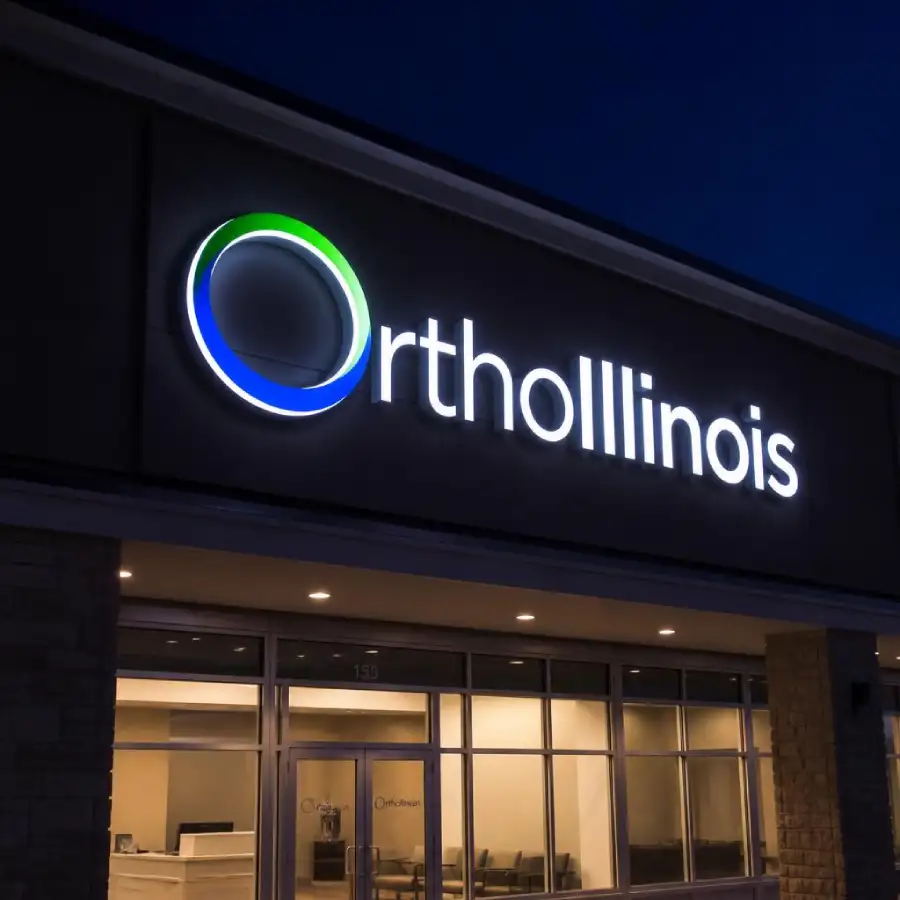
Fall is the last stretch of the year when a bucket lift, a ladder, and a repair crew can all work outside without fighting ice on the pavement. A fall sign maintenance checklist covers the electrical, structural, and cosmetic points on channel letters, cabinet signs, monument signs, and window graphics that are cheap to fix in October and expensive to fix in January. Once the ground freezes and daylight shortens, the same repair takes longer, costs more, and often has to wait until spring anyway.
Key takeaways: Walk the property before the first hard freeze and check illumination on every lit sign, inspect mounting hardware and footings for movement, replace worn banners and vinyl before ice and salt make them brittle, and reset timers and photocells now that dusk arrives earlier. A sign that fails in December stays broken through the busiest retail season of the year.
Why Fall Is the Right Window for Sign Maintenance
Two things change in Pittsburgh between September and December that make fall the deadline, not just a good time, for a sign inspection.
The first is daylight. Daylight Saving Time ends in early November, which means every illuminated sign on a property switches on an hour earlier and runs an hour longer, every single day, right as the holiday shopping season starts. A channel letter set or cabinet sign that has been quietly running on a couple of dead LED modules through the summer becomes obviously, visibly broken the moment it has to carry a storefront’s visibility through five p.m. darkness instead of seven p.m. darkness.
The second is weather. Western Pennsylvania’s freeze-thaw cycle is hard on anything mounted outside: water that gets behind a sign face or into a mounting bracket in October expands when it freezes in December, and that’s what turns a small seal failure into a cracked panel or a loose bracket into a safety issue. In our experience, most of the structural sign repairs we get called out for in January started as something small enough to fix from a ladder in October.
Ground access matters too. A monument sign footing or a pylon sign base that needs concrete work is a fall job. Once the ground freezes, that repair typically has to wait for spring, which means a compromised footing sits through an entire winter of freeze-thaw cycles before anyone can safely fix it.
Illuminated Channel Letters: What to Check Before the Hours Add UP
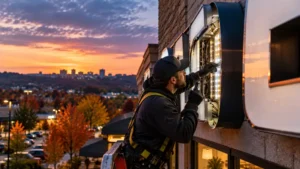
Channel letters are individual, illuminated three-dimensional letters mounted directly to a building face, and they’re one of the most common exterior sign types for Pittsburgh retail storefronts and restaurants. Because they run more hours per day starting in November, any electrical issue that was marginal in summer gets exposed fast.
Walk the storefront at dusk and look for letters that are dim, flickering, or fully dark. A single dead LED module is a quick fix; a string of dark letters usually points to a failing transformer or a power supply nearing the end of its service life, and those take longer to source and replace. Check the caulk and gasket seals around each letter’s mounting points too. A seal that’s cracked or pulling away lets moisture into the letter housing, and moisture sitting against an LED module through a freeze cycle is one of the more common ways a healthy sign turns into a dark one overnight.
It’s also worth looking at the letter faces themselves for UV fading or hairline cracks from thermal expansion. Acrylic faces expand and contract with temperature swings, and a crack that’s barely visible in October tends to widen once it’s cycling through freezing nights and (relatively) warmer days.
Cabinet Signs and Lightboxes: The Seal Is Everything
Cabinet signs are internally illuminated box signs with a printed or routed face panel, common on convenience stores, pharmacies, and multi-tenant retail centers where a bright, uniform panel needs to read clearly from the road. Unlike channel letters, a cabinet sign’s entire face is one sealed unit, which means a single compromised seal puts the whole panel at risk rather than just one letter.
Check the perimeter gasket where the face panel meets the cabinet frame for gaps, especially at the corners, where UV exposure and thermal cycling tend to work a seal loose first. Look inside the cabinet if there’s an access panel: condensation on the interior of the face or streaking on the ballast or LED driver is a sign that moisture is already getting in, not a warning that it might. Panel fading is a cosmetic issue in most cases, but a panel that’s faded unevenly, brighter at the edges than the center, can also indicate the internal lighting has partially failed.
Monument, Pylon, and Post-and-Panel Signs: Structural Checks Before the Ground Freezes

Ground-mounted signage carries a different set of risks than wall-mounted signs, mostly because the failure points are structural rather than electrical. Walk the base of every monument sign, pylon sign, and post-and-panel sign on the property and look for hairline cracks in the concrete footing, gaps where the sign structure meets its base, and any visible lean or shift compared to how it sat last year.
Mounting hardware deserves a close look too. Bolts and brackets that have been rusting quietly all summer are easier to catch and replace now than after a winter of additional moisture exposure. If a monument sign is illuminated, check the internal or landscape lighting the same way as a cabinet sign, since these fixtures often sit lower to the ground and take more direct exposure to salt spray from nearby roads during winter plowing season.
Banners, Window Graphics, and Vinyl: What Won’t Survive the Cold
Vinyl and fabric graphics have a different failure mode than illuminated signs: they don’t go dark, they just get worse-looking and eventually fail outright, and cold weather accelerates both. Check banner grommets and hems for tearing or stretching, since a grommet that’s already pulling loose in October will likely finish tearing free the first time a winter wind gust catches it.
Window and wall graphics deserve a closer look at the edges. Vinyl that’s starting to lift or peel at a corner is far easier to repair or replace now, while it’s still warm enough to properly re-adhere new material, than after the first hard freeze makes vinyl brittle and adhesive far less forgiving. A lifted edge that gets left through winter usually comes back in spring as a full graphic replacement instead of a spot repair.
Electrical and Timing: The Part That Gets Skipped
Every illuminated sign on the property runs on a timer or photocell that tells it when to turn on and off, and those settings are usually set once and forgotten. With Daylight Saving Time ending in early November, a timer that was set correctly for summer dusk will have a sign turning on an hour too late all winter unless someone resets it. Photocells that respond to ambient light rather than a fixed clock avoid that specific problem, but they’re worth testing anyway, since a photocell sensor that’s gotten dirty or partially obstructed can misjudge dusk by a wide margin.
While checking timers, it’s also worth a quick visual check for any exposed wiring, worn conduit, or a disconnect box that isn’t sealed properly. These are the kind of issues that sit quietly for months and then become a genuine safety concern once moisture and freezing temperatures are both in the mix.
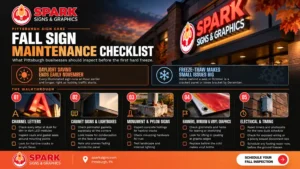
The Fall Sign Maintenance Checklist at a Glance
DIY Walkthrough vs. Calling a Professional
A visual walkthrough at dusk, checking for dark letters, obvious wear on banners, and anything that looks structurally off, is something most business owners can do themselves in twenty minutes. Anything involving electrical work inside a sign cabinet, ladder or lift access above the first few feet, or structural repair to a footing or mounting bracket is worth bringing in a licensed sign company for, both for safety and because most sign warranties require professional service to stay valid.
In our experience, the businesses that get the most value out of fall maintenance are the ones that do their own dusk walkthrough first, then call in a professional to handle whatever the walkthrough flagged, rather than skipping the visual check and waiting for something to fail outright.
Frequently Asked Questions
How often should business signage be professionally inspected?
Most illuminated signs benefit from a professional inspection once a year, and fall is the ideal timing since it catches problems before winter weather makes them worse and before the sign has to carry longer illumination hours through the holiday season.
Can sign repairs be done once it’s cold outside?
Some repairs, like LED module replacement or electrical work, can be done in cold weather. Others, particularly anything involving adhesive vinyl application or concrete footing work, need warmer temperatures to be done properly, which is why those specific repairs belong on the fall checklist rather than the winter one.
What’s the first sign that a channel letter or cabinet sign needs attention?
Dim or flickering illumination is usually the earliest visible symptom, showing up well before a letter or panel goes fully dark. Catching it at that stage is what keeps a repair small.
Does sign maintenance affect insurance or compliance?
A structurally compromised sign, particularly a ground-mounted sign with a cracked footing or loose hardware, can become a liability issue if it fails and causes damage or injury. Keeping structural elements in good condition is part of standard commercial property upkeep, separate from any cosmetic reasons to maintain a sign’s appearance.
Should I replace a faded sign face or repair it?
It depends on how the fading occurred. Uneven fading tied to a lighting problem usually points to a repair. Even, overall fading from years of UV exposure is more often a sign that the face has reached the end of its useful life and a full replacement will look better and last longer than a patch repair.
How long does a typical channel letter or cabinet sign last before it needs major work?
With regular maintenance, illuminated signage commonly runs ten years or more before facing a major overhaul, though individual components like LED modules and transformers often need attention well before that.
Keeping Signage Ready for Winter
A fall sign maintenance checklist isn’t about catching every problem, it’s about catching the ones that get worse in the cold and harder to access once the ground freezes. A dusk walkthrough, a look at seals and mounting hardware, and a reset of the timers now that the days are shorter cover most of what causes an emergency call in January.
Spark Signs works with Pittsburgh-area businesses on both new signage and ongoing maintenance for channel letters and cabinet signs, and fall inspections are one of the most requested services on the calendar this time of year. Reaching out before the first hard freeze keeps a small fix small.