A storefront window is selling something twenty-four hours a day, whether or not there’s a customer inside to ring it up. Retail window display marketing works because a passerby decides in roughly three seconds whether a store is worth a second look, and that decision happens entirely on the sidewalk, before anyone walks through the door. The retailers who treat their windows as an active sales tool, not passive decoration, are the ones converting foot traffic into actual store visits.
The Three-Second Decision
Why the Sidewalk Is Where the Sale Starts
Most foot traffic passing a storefront isn’t actively shopping, it’s on the way somewhere else. A window has a very short window, so to speak, to interrupt that momentum with something specific enough to register at a glance: a single hero product, a bold seasonal message, or a graphic strong enough to read from across the street. Cluttered windows with ten competing messages lose to a single confident one almost every time.
One Focal Point, Not Five
In our experience working with Pittsburgh retailers, the single most common window mistake is trying to communicate everything the store sells in one display. A window with one clear focal point — a featured product, a seasonal promotion, a striking graphic, reads instantly. A window with five equally weighted elements reads as noise and gets scanned past.
Color and Contrast Do the Initial Stopping
Before a passerby even processes what a display is selling, color and contrast are what stop the eye in the first place. A window that reads several shades darker or brighter than the storefronts on either side of it gets noticed simply by standing out from its surroundings, independent of what the actual message says. Matching a display’s overall value and contrast to the storefront’s competitive environment, rather than defaulting to whatever colors happen to be in stock, is a detail that separates displays that get a second look from ones that blend into the block.
Depth and Layering Sell Harder Than Flat Displays
A flat window vinyl graphic communicates a message, but a layered display, foreground product, midground graphic element, background color block, creates depth that catches the eye from further down the sidewalk, not just directly in front of the store. Sightline depth matters more in commercial corridors where people are approaching from an angle rather than walking straight toward the entrance.
The strongest windows layer three elements rather than relying on one: an actual product or mannequin for physical depth, a graphic message for the takeaway, and consistent brand colors so the window is recognizable even from across the street. Flat vinyl alone communicates a message; adding a foreground object gives the display a sense of scale that a passerby can register from much further down the block.
Windows as a Sales Channel
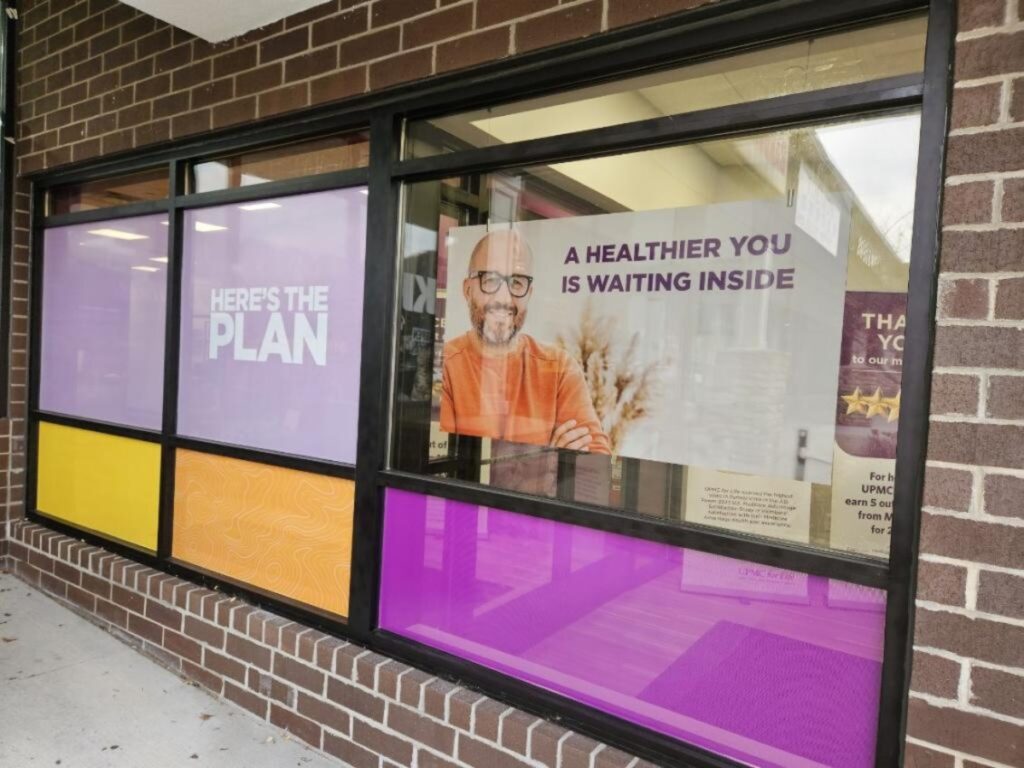
Custom storefront window graphics let a retailer control exactly what that three-second sidewalk decision sees, rather than leaving it to whatever happens to be visible through the glass that day. Cut vinyl lettering, full-color printed graphics, and frosted accent panels all work as tools within the same window, chosen based on what the display actually needs to communicate.
Perforated window film is worth calling out specifically, since it lets a display cover significantly more glass with a promotional message without turning the interior dark or blocking staff sightlines to the sidewalk. It’s the option that solves the tradeoff most retailers run into with large-format window graphics: wanting more visual real estate on the glass without sacrificing the storefront’s connection to the street.
Seasonal Refresh Is Not Optional
A window that hasn’t changed in eight months reads as a store that hasn’t changed in eight months, whether or not that’s true inside. Seasonal event displays tied to the local calenda, holidays, festivals, back-to-school, or a specific promotion, give regular walkers a reason to look again instead of mentally filing the storefront as already-seen.
A Quick Window Audit
- Stand across the street and count how many distinct messages the window communicates, if it’s more than one or two, simplify.
- Check how long since the display last changed; anything past a season is overdue.
- Walk toward the store from an angle, not straight on, and see whether the display still reads from that sightline.
- Ask whether the window’s message matches what’s actually happening in the store right now.
Common Window Display Mistakes That Kill Conversion
Beyond overcrowding, the two mistakes we see most often in Pittsburgh retail corridors are glare and timing. A window with no anti-glare treatment or interior lighting plan becomes a mirror of the street during peak daylight hours, hiding the entire display behind a reflection instead of showing it off, regardless of how strong the underlying design is.
Timing is the second failure: a seasonal promotion left up well past its relevance signals a business that isn’t paying attention to its own storefront, which undercuts the exact impression a good display is trying to build. A spring display still up in July reads as neglect, even when the store inside is fully up to date.
Pittsburgh Events That Give Windows a Reason to Change
Retail corridors in Pittsburgh have a long calendar of local tie-in opportunities that give a window a reason to change on a predictable schedule rather than an arbitrary one. Picklesburgh in July, Light Up Night in November, and the run-up to Steelers season in the fall all bring predictable spikes in foot traffic that a timed window refresh can capture.
Tying a display to a named local event does more than a generic seasonal theme, since it signals that a business is paying attention to what’s actually happening in the neighborhood right now, not just swapping in a stock holiday graphic on a calendar-driven schedule.
Building a Window Strategy That Works All Year
The retailers who get the most out of their windows treat display rotation as a recurring line item, not a one-time project, budgeting for four to six changes a year rather than installing one graphic and leaving it up indefinitely. Spark Signs works with Pittsburgh retailers on a rotation calendar that pairs seasonal event displays with the storefront window graphics that stay up year-round, so the base brand presence never disappears while the seasonal layer changes on schedule.
Frequently Asked Questions – Retail Window Displays
How often should a retail window display change?
Most retail windows should be refreshed at least seasonally, and more often around specific promotions or local events. A display left unchanged for many months reads as stale and stops earning second looks from regular foot traffic.
What is the biggest mistake in retail window design?
Trying to communicate too many messages in one window. A single, clear focal point converts far better than a display split across five competing elements, since passersby only have a few seconds to register the message.
Do window graphics work for stores with narrow sidewalks?
Yes. Narrow-sidewalk storefronts benefit from layered, depth-based displays that read clearly from an angle, since most passersby approach at an angle rather than walking straight toward the entrance.
What is the difference between window vinyl and printed window graphics?
Cut vinyl lettering is best for clean text and simple shapes, while full-color printed graphics handle photography, gradients, and detailed imagery. Most storefronts use a combination of both depending on what each section of the window needs to communicate.
Can window displays be tied to local events or holidays?
Yes, and doing so is one of the most effective ways to justify a seasonal refresh. Displays tied to a recognizable local event or holiday give repeat foot traffic a specific, timely reason to look again.
Does Spark Signs design and install storefront window graphics?
Yes. Spark Signs designs, produces, and installs custom storefront window graphics for retailers throughout Pittsburgh and Western Pennsylvania, including seasonal and event-specific displays.