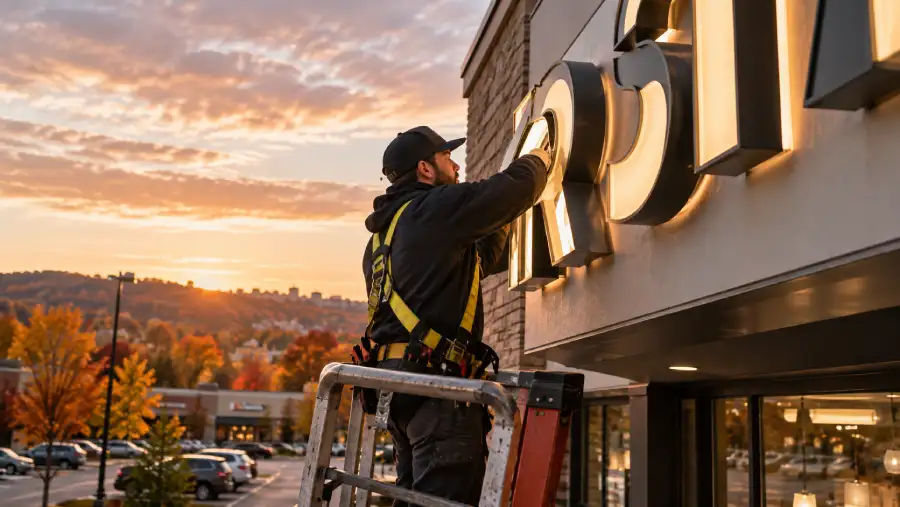
Thirty days out is the point where trade show prep either becomes a checklist or becomes a scramble. Trade show preparation checklist planning works in reverse from show day: booth graphics and banners need lead time to design and produce, staffing needs to be locked before travel schedules fill up, and promotion needs enough runway to actually reach the people who’ll walk the floor. Missing any one of those on a fixed deadline is what turns a well-planned show into a last-minute fire drill.
Weeks 4 Through 3: Booth Materials and Logistics
Confirm Booth Graphics and Displays
Thirty days is close to the minimum lead time for custom trade show displays and booth graphics that need design revisions, proofing, and production, so this is the week to finalize artwork rather than start it. Retractable banners, backdrop panels, and table throws all have their own production timeline, and stacking them at the last minute means picking whichever vendor has rush capacity rather than the best price.
Lock Shipping and Drayage Details
Booth materials that need to ship to a venue rather than travel with staff have their own deadline separate from production, since advance shipment windows at most convention centers close well before show day and late freight gets charged a drayage premium. Confirming the shipping address, advance warehouse deadline, and carrier before week three avoids a last-minute logistics scramble on top of the production one.
Weeks 3 Through 2: Staffing and Booth Layout
Confirming who’s actually working the booth, not just who’s attending the show, needs to happen early enough that travel and hotel bookings don’t compete with better rates closer to the date. Booth staff also need a clear assignment beyond “be there,” a specific role at the table, a script for the pitch, and a plan for lead capture.
Booth Layout and Traffic Flow
A booth’s physical layout determines whether attendees walk in or walk past, and thirty days out is the window to finalize that layout against the confirmed floor plan rather than guessing at square footage. Open, uncluttered entry points consistently outperform booths that force a visitor to squeeze past a table to get inside.
Booth Layout and Traffic Flow
A booth’s physical layout determines whether attendees walk in or walk past, and thirty days out is the window to finalize that layout against the confirmed floor plan rather than guessing at square footage. Open, uncluttered entry points consistently outperform booths that force a visitor to squeeze past a table to get inside.
Weeks 2 Through 1: Promotion and Pre-Show Outreach
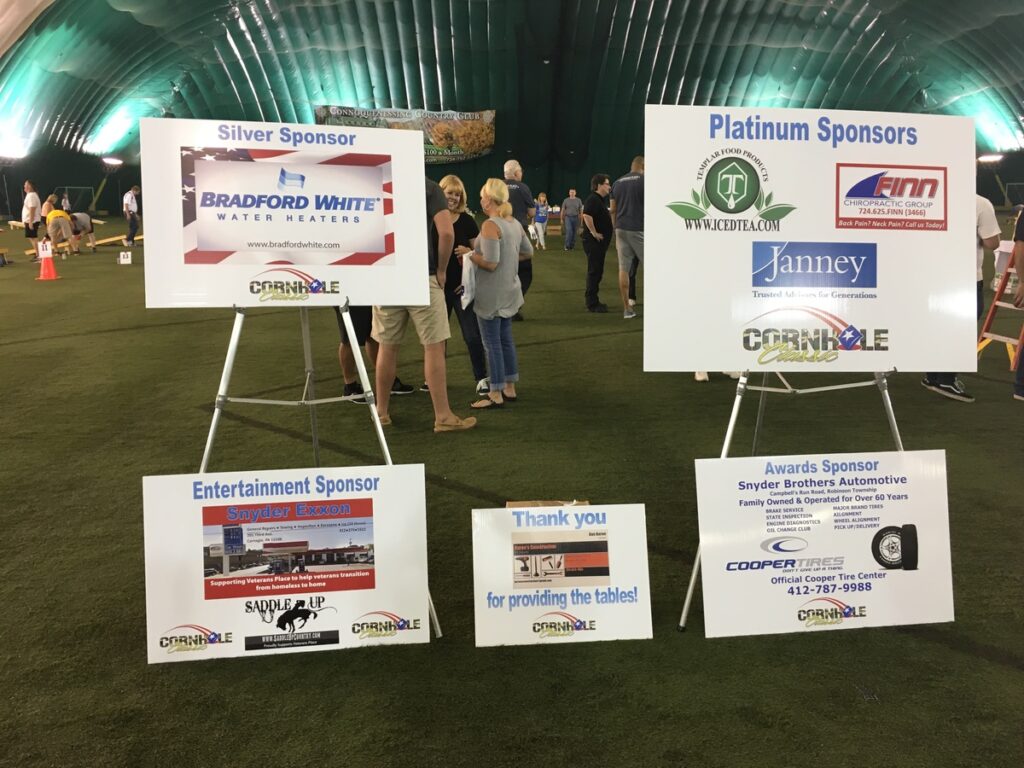
Trade show displays and booth graphics only work if people know to look for the booth in the first place, which is why pre-show promotion has its own deadline separate from the booth build itself. Email outreach to existing contacts attending the show, social posts confirming the booth number, and any pre-scheduled meetings all need to go out with enough lead time to actually land on someone’s calendar before the show floor opens.
Retractable banners and directional signage placed near a booth’s approach also do double duty as promotion once the show starts, giving attendees a visual cue from down the aisle rather than relying on a booth number alone to pull them in.
Final Week: Confirming Everything Ships and Arrives
The final week before a show isn’t the time to be finalizing anything new, it’s the week to confirm that what was already planned is actually moving. Portable event banners, table throws, and any last-minute printed materials should be packed and either shipped or loaded for direct transport with enough buffer to account for a shipping delay or an early load-in requirement at the venue.
This is also the week to do a full booth dry run if space allows, setting up the display exactly as it will appear on the show floor to catch a missing bracket or a banner stand that doesn’t extend the way it did in the warehouse.
What Happens When the Countdown Gets Compressed
Not every trade show booking allows a full thirty days, and a compressed timeline changes the priority order rather than eliminating steps. Booth graphics and banners become the first casualty of a short runway, since production lead time is the least flexible part of the checklist, which means confirming artwork in the first 48 hours of a compressed schedule rather than the first week.
Rush production is available for banners and smaller displays, though it usually means fewer proof rounds and less room to catch a design issue before print, so a compressed timeline calls for tighter internal sign-off before anything goes to production.
A 30-Day Trade Show Checklist at a Glance
- Days 30-24: Finalize booth graphics and banner artwork, confirm shipping and drayage deadlines
- Days 23-15: Lock booth staffing and travel, finalize booth layout against the confirmed floor plan
- Days 14-7: Send pre-show promotion, confirm any scheduled meetings, place directional signage orders
- Days 6-1: Confirm shipping status, run a full booth dry setup if space allows, pack a repair kit
Preparing for Pittsburgh’s Fall Trade Show Season
Spark Signs works with Pittsburgh-area businesses on trade show materials year-round, but the volume noticeably concentrates in the weeks leading into fall trade show season, when several regional B2B expos and conventions land within a few weeks of each other. Booking booth graphics production early in that window, rather than the week a specific show is confirmed, is what keeps a company from competing with every other regional exhibitor for the same rush production slots.
In our experience, the businesses that treat trade show prep as a recurring, scheduled process rather than a one-off scramble each time a show comes up are the ones who consistently have their booth materials ready well before the thirty-day mark, not scrambling to hit it
Choosing the Right Booth Display Format for Your Space
Not every booth needs the same display format, and thirty days out is a reasonable point to confirm the format actually matches the assigned floor space rather than defaulting to whatever was used at the last show. A 10×10 booth usually works best with a single backdrop banner and a retractable banner or two flanking the entry, while a larger 10×20 or corner booth has room for a modular pop-up display with more panel space for messaging.
Tabletop displays are worth considering for smaller shows or secondary events where a full backdrop isn’t practical, since they pack smaller for shipping and set up in minutes without dedicated labor. The tradeoff is visibility from a distance, a tabletop display reads clearly up close but doesn’t pull attention from across a crowded hall the way a full-height backdrop does.
What to Pack Beyond the Booth Materials
A repair kit is easy to skip when everything is being packed thirty days out, but it’s the difference between a five-minute fix and a booth that looks unfinished for the rest of the show. Zip ties, double-sided tape, a small tool kit for banner stand hardware, and a few spare grommets cover most of the small failures that show up during setup.
It’s also worth packing a printed backup of any digital signage content and a spare set of business cards or lead capture forms, since venue wifi and device charging aren’t guaranteed to cooperate on show day, and a booth that can’t function without a live internet connection is a risk that’s easy to avoid.
After the Show: Turning Leads Into Follow-Up
The checklist doesn’t end when the booth comes down. Leads collected on the show floor lose value quickly, and the businesses that follow up within 48 hours of a show closing convert meaningfully more of those contacts than the ones that wait until the following week once regular work schedules take back over.
Booth staff should leave the show with leads already sorted by priority, not just a stack of business cards to sort through later, since that sorting is far easier to do accurately in the moment than a week after the details of each conversation have faded.
Frequently Asked Questions – Trade Show Preparation
How far in advance should I order trade show booth graphics?
Thirty days is a reasonable minimum for custom trade show displays and booth graphics that require design revisions and standard production time. Simpler items like banners can sometimes be rushed in under two weeks, but complex or multi-panel displays need the full lead time to avoid a compressed proofing process.
What’s the most common trade show prep mistake?
Finalizing booth graphics too late in the process, since production and shipping deadlines are the least flexible parts of trade show prep. Staffing and promotion can be adjusted closer to the date, but a booth graphic still in design thirty days out puts the whole booth at risk of arriving late.
Do I need to ship booth materials in advance, or can I bring them with me?
Larger booth materials, especially anything requiring assembly or exceeding checked luggage size, typically need to ship to the venue’s advance warehouse ahead of show days to avoid drayage penalties and last-minute freight costs. Smaller items like table throws or a single retractable banner can often travel with staff.
How do I choose the right size retractable banner for my booth?
Retractable banner size should match both the booth’s approach distance and the venue’s aisle width, since a banner that’s too small gets lost in a crowded hall while one that’s too large can overwhelm a smaller booth footprint. Matching banner scale to booth square footage is the most reliable starting point.
Can Spark Signs handle rush trade show orders?
Yes, rush production is available for banners and smaller booth displays, though it typically means fewer proof rounds before printing. Compressed timelines call for faster internal sign-off on artwork to make the most of the available production window.
What should I do if my trade show booking doesn’t allow a full 30 days?
Prioritize booth graphics and banner production first, since that has the least flexible lead time, and confirm artwork within the first 48 hours of the compressed schedule. Staffing, promotion, and layout planning can compress more easily than physical production and shipping.